
Clicker Training vs. Verbal Cues: Which Communication Style Suits Your Pet?
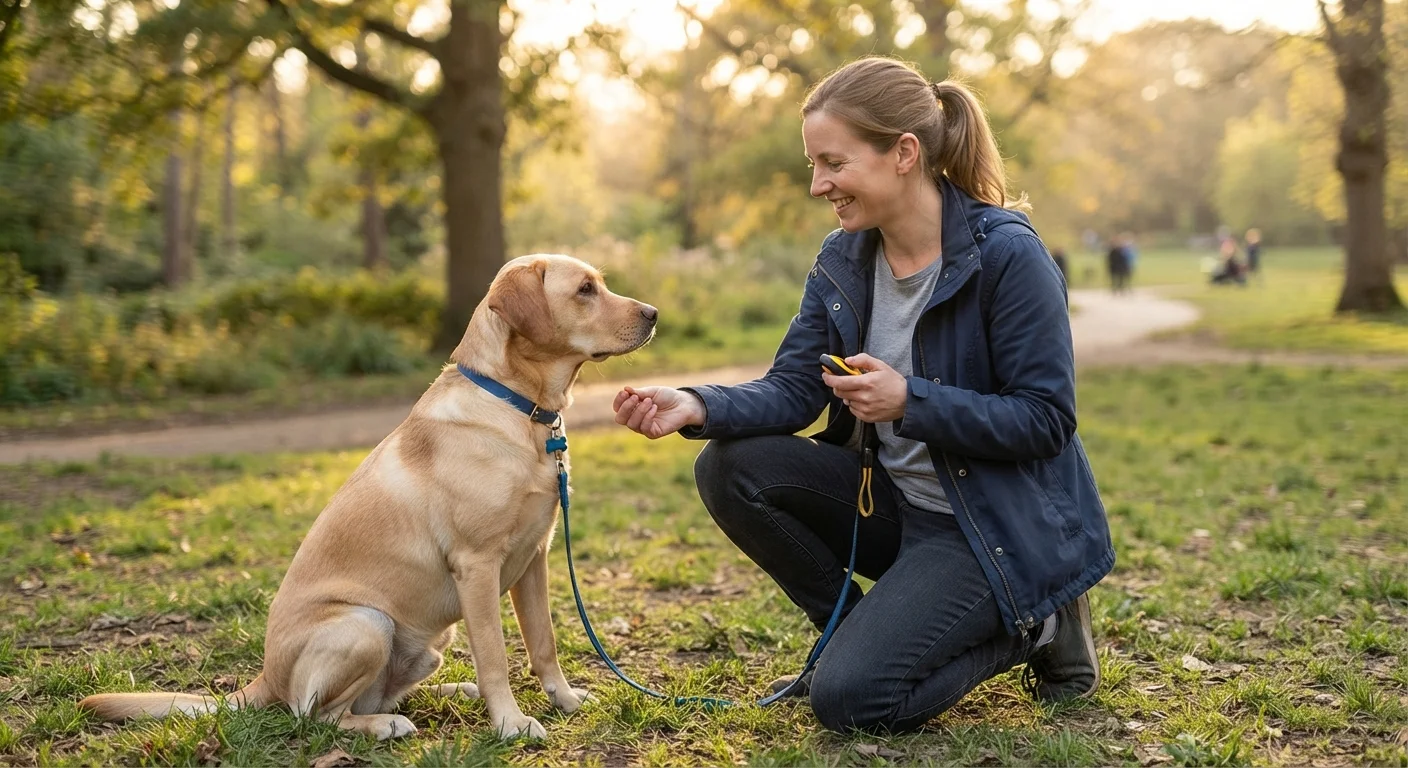
Photo credit: Infolagoon.com | Blogs To Rely On
In this article
Both clicker training and verbal cues can be effective — but they work differently. Here's how to decide which approach fits your pet and lifestyle.
Key Takeaways
- Clicker training uses a distinct sound to mark the exact moment a correct behavior occurs.
- Verbal cues are flexible and require no equipment, but tone and consistency matter greatly.
- Both methods rely on positive reinforcement principles to be effective.
- Many experienced trainers combine both techniques for best results.
- Your pet's species, hearing ability, and environment all influence which method works better.
How Each Method Actually Works
Both clicker training and verbal cues are rooted in operant conditioning — the process by which animals learn to associate their own actions with outcomes. Understanding the mechanics of each helps clarify why one might outperform the other in specific situations.
Clicker training uses a small handheld device that produces a consistent clicking sound the instant a desired behavior occurs. This click functions as a conditioned reinforcer — a sound that has been paired with rewards (typically food) until the animal recognizes it as meaningful. The click's power lies in its neutrality and precision: it sounds identical every time, carries no emotional charge, and can pinpoint a behavior within a fraction of a second.
Verbal cues are spoken words or short phrases — "sit," "stay," "come" — used to prompt a behavior the animal already understands. Unlike the clicker, they're not typically used as an event marker but as a prompt issued before the behavior occurs. Their effectiveness depends heavily on the animal associating the specific word (and the tone it's delivered in) with the expected action and its reinforcement.
For a deeper look at why reward-based methods work across both approaches, see our article on positive reinforcement in pet training.
| Criterion | Clicker Training | Verbal Cues |
|---|---|---|
| Primary function | Marks correct behavior instantly | Prompts a known behavior |
| Equipment needed | Handheld clicker device | None |
| Timing precision | Very high — fraction-of-a-second accuracy | Moderate — varies by speaker |
| Emotional neutrality | High — same sound every time | Lower — tone varies naturally |
| Best training stage | Teaching new behaviors | Maintaining established behaviors |
| Ease of use in daily life | Requires carrying device | Always available |
| Works for cats and small animals | Generally well-suited | Possible, but tone-sensitive |
Key Trade-Offs: Precision, Portability, and Consistency
The clicker's biggest advantage is timing precision. In behavior science, the gap between an action and its marker significantly affects learning speed. A click delivered within half a second of the correct behavior communicates clearly; a verbal "good boy" delivered a few seconds later may inadvertently mark the wrong moment. This makes clickers especially valuable during initial training of complex or fast-moving behaviors.
Verbal cues, however, offer portability and integration. You always have your voice with you. Once a behavior is fully trained, shifting to a verbal cue — without a clicker — is standard practice. Most training protocols use the clicker to teach new behaviors, then phase it out as the verbal cue takes over for day-to-day use.
The Clicker Is a Teaching Tool, Not a Remote Control
A common misconception is that clicking at a pet will prompt it to perform a behavior. In reality, the clicker is a marker — it communicates 'that was correct' after the fact, not a command. Verbal cues serve the prompting role. Keeping these functions distinct helps owners use each tool more effectively.
Consistency is the variable that most determines success with either method. Inconsistent timing, varying tone, or irregular reinforcement will undermine both techniques equally.
Species also matters. Dogs and cats learn differently, and what works well for a highly social dog may require adjustment for an independent-minded cat or a small animal like a rabbit or parrot.
Choosing the Right Fit — or Combining Both
For most pet owners, the question isn't strictly either/or. A common and effective approach is to use the clicker to establish new behaviors, then transition to verbal cues once the behavior is reliable. This combines the learning efficiency of click-marking with the real-world practicality of spoken commands.
Consider the following when deciding:
- Training stage: New behaviors benefit from clicker precision; established ones transfer well to verbal cues.
- Environment: Noisy or high-distraction settings can make verbal cues harder to hear consistently — a clicker may cut through better.
- Your pet's sensory profile: Animals with hearing loss may need visual markers (such as a hand signal) in place of either method.
- Your own consistency: If you struggle with device timing, a well-timed verbal marker like "yes!" can serve a similar bridging function.
If you're unsure whether your current approach is landing, these signs your training isn't working can help you identify what to adjust. You might also explore group classes vs. private instruction to find a setting that supports whichever communication style you choose.
This article is for general informational and educational purposes only. For personalized training guidance, consult a certified professional animal trainer or a veterinary behaviorist.

Author
Pets & Animals Editorial Team
Pets & Animals Editorial Team is the collective byline for our editorial team and contributor network. Articles published under this byline or an editorial pen name are researched, written, and reviewed according to our editorial standards for clarity, consistency, and independence before publication.
View all articles →