
What Is a Savings Rate and Why Does It Matter More Than Your Income?
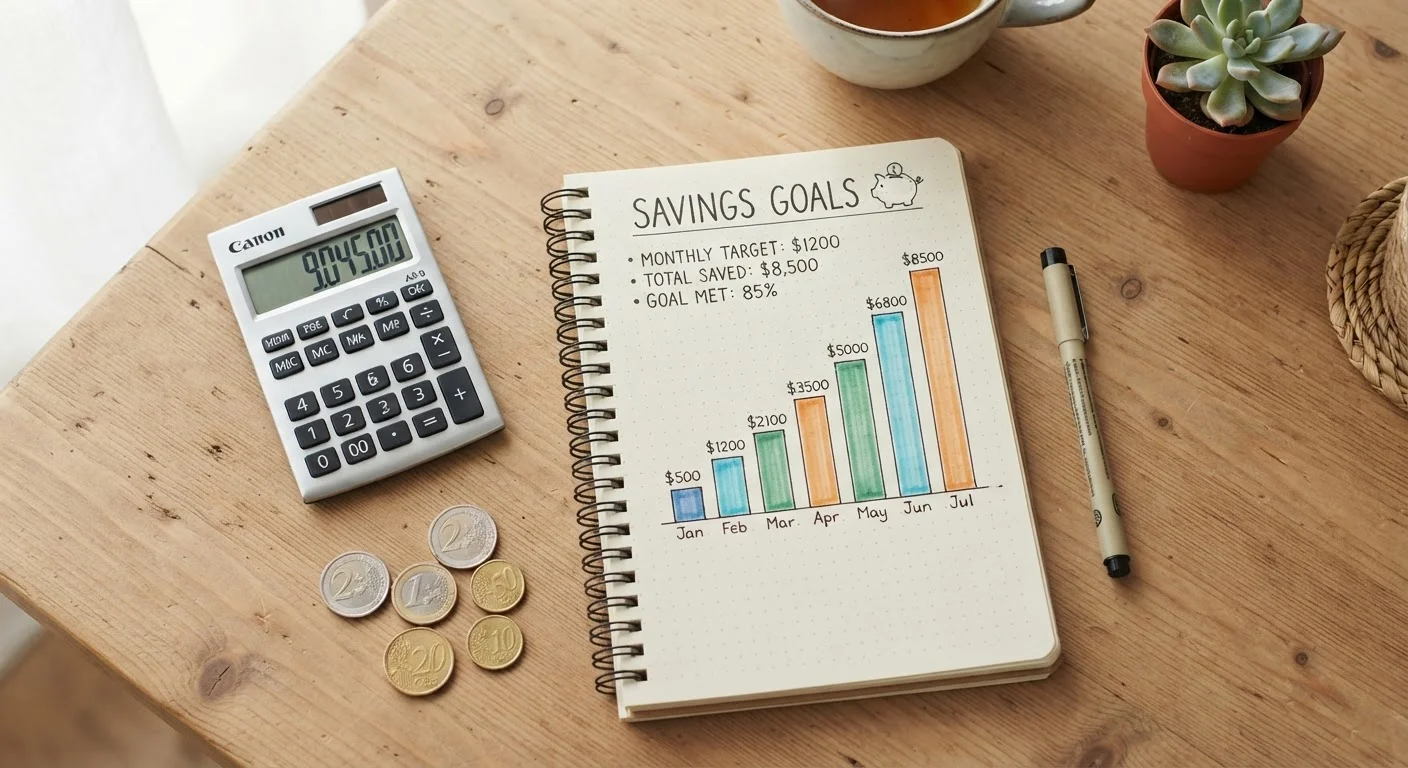
Photo credit: Infolagoon.com | Blogs To Rely On
In this article
Your savings rate—not your salary—often determines financial progress. Learn what it means, how to calculate it, and why it's worth tracking.
Key Takeaways
- Savings rate measures what percentage of your income you keep, not how much you earn.
- Even a modest savings rate, maintained consistently, compounds into meaningful financial progress over time.
- A high income paired with a low savings rate often leads to slower wealth-building than a moderate income with a high savings rate.
- Tracking your savings rate regularly helps you spot problems and set realistic, measurable targets.
- Small, incremental increases to your savings rate can make a significant long-term difference.
How to Calculate Your Savings Rate
The formula is straightforward: divide the amount you saved during a period by your total income for that period, then multiply by 100 to get a percentage.
Example: If you bring home $4,000 per month and save $600 of it, your savings rate is 15% ($600 ÷ $4,000 × 100).
What counts as "savings" matters here. Include contributions to retirement accounts (401(k), IRA), a dedicated emergency fund, sinking funds for specific goals, and any other money intentionally set aside rather than spent. Debt repayment beyond the minimum payment is sometimes included as well, since it increases your net worth.
Automate Before You Spend
Set up an automatic transfer to your savings account for the day after each paycheck arrives. This 'pay yourself first' approach removes the temptation to spend first and save whatever remains. Even a small automated amount builds the habit — and habits compound just like interest.
Once you have your rate, you have a real number to improve — which is far more actionable than a vague goal like "save more."
Why Savings Rate Outweighs Income
It might seem obvious that earning more leads to saving more. But income alone is a poor predictor of financial progress. Consider two people: one earns $90,000 a year and saves 8% ($7,200 annually); another earns $60,000 and saves 22% ($13,200 annually). Despite the lower salary, the second person builds wealth nearly twice as fast.
~5%
US personal savings rate in recent years
The U.S. Bureau of Economic Analysis tracks the personal saving rate, which has frequently hovered in the low single digits — well below the 15–20% range often cited as a long-term wealth-building benchmark.
2x
Wealth-building speed advantage of a higher savings rate
Illustrative modeling consistently shows that doubling your savings rate — even on a lower income — can accumulate comparable or greater wealth than a higher earner with a low savings rate over a 10–20 year horizon.
1%
Annual savings rate increase needed to see real impact
Financial planning principles suggest that raising your savings rate by just 1 percentage point per year produces compounding gains in account balances over a decade — without requiring a dramatic lifestyle change.
This dynamic — sometimes called the savings rate effect — is why many personal finance educators argue that controlling spending is at least as important as growing income. Lifestyle inflation, the tendency to increase spending as income rises, is the common culprit that keeps savings rates stagnant even as paychecks grow.
Common savings misconceptions often center on income being the primary lever — but the data consistently point elsewhere. Your rate is the lever you control most directly, starting today.
Setting a Realistic Savings Target
There's no single right savings rate for everyone. Your ideal target depends on your current financial situation, the goals you're working toward, and your timeline. That said, having a specific percentage target — even an imperfect one — is far more effective than saving "whatever's left over."
Consider tiering your thinking:
- Foundational rate (5–10%): A starting point if cash flow is tight or you're working on high-interest debt. Even this rate, sustained consistently, adds up. See practical approaches for tight budgets for guidance.
- Steady-progress rate (15–20%): A commonly cited benchmark for long-term wealth building, particularly when retirement savings are included.
- Accelerated rate (25%+): Appropriate for those with aggressive goals — earlier retirement, a large purchase, or catching up after a financial setback.
Understanding what savings milestones actually represent can help you put your rate in context and see how incremental progress connects to real financial security over time.
This article is for general informational and educational purposes only and does not constitute personalized financial advice. Consult a licensed financial professional for guidance specific to your situation.
Making Your Savings Rate a Habit, Not a Calculation
Calculating your savings rate is useful. Automating it is transformative. When savings are transferred automatically at the start of each pay period — before discretionary spending decisions happen — you remove the friction that causes most people to fall short of their own targets.
A few practical moves that support a consistent rate:
- Automate transfers to a separate account on payday, treating savings like a fixed bill.
- Review monthly to catch months where the rate slipped and understand why.
- Increase incrementally — even raising your rate by 1% each quarter is meaningful over a year.
- Use windfalls intentionally — directing tax refunds, bonuses, or gifts toward savings provides a periodic boost without affecting your regular budget.
Understanding where your savings should go is equally important. The difference between an emergency fund, sinking fund, and savings account shapes how effectively your saved dollars work for you. If your rate seems right but results feel flat, explore why savings sometimes stall — the cause is often structural, not behavioral.
Savings Rate Is a Direction, Not a Grade
A low savings rate today is not a judgment — it's a baseline. Many households face real constraints that make higher rates genuinely difficult in the short term. What matters is whether the rate is moving in the right direction over time. Even incremental improvements build meaningful momentum.
Frequently Asked Questions

Author
Money & Finance Editorial Team
Money & Finance Editorial Team is the collective byline for our editorial team and contributor network. Articles published under this byline or an editorial pen name are researched, written, and reviewed according to our editorial standards for clarity, consistency, and independence before publication.
View all articles →