
The 50/30/20 Rule Explained
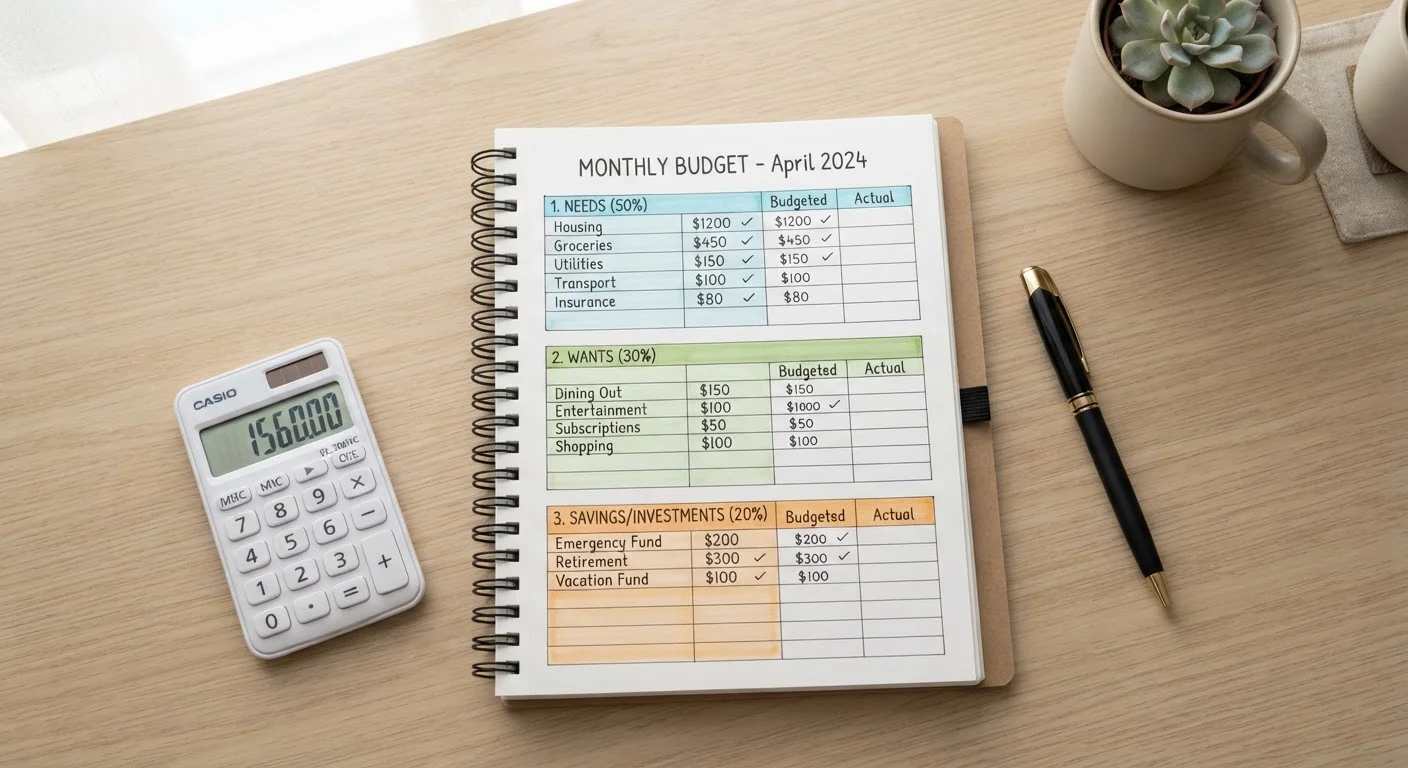
Photo credit: Infolagoon.com | Blogs To Rely On
In this article
The 50/30/20 rule divides income into needs, wants, and savings. Here's what it means, how it works, and when it makes sense to use it.
Key Takeaways
- The 50/30/20 rule splits after-tax income into needs (50%), wants (30%), and savings or debt repayment (20%).
- "Needs" are essential expenses you cannot avoid; "wants" are discretionary spending choices.
- The 20% savings category should include both emergency fund contributions and retirement savings.
- The rule works best as a starting point — individual circumstances may require adjusting the percentages.
- High cost-of-living areas or significant debt loads may make the standard split difficult to maintain.
How the Three Categories Work
The 50/30/20 rule creates three buckets for every dollar of after-tax income you earn. Understanding what belongs in each one is essential to making the framework work.
50% — Needs
Needs are non-negotiable expenses: the bills and costs you must pay to maintain a basic standard of living. Common examples include:
- Rent or mortgage payments
- Groceries and household supplies
- Utilities (electricity, water, heat)
- Health insurance premiums and essential medical costs
- Minimum loan or credit card payments
- Basic transportation (car payment, insurance, or public transit)
If you could live without something or substitute a cheaper version without serious hardship, it probably belongs in wants, not needs. Streaming services, gym memberships, and dining out are wants — even if they feel essential.
30% — Wants
Wants are the discretionary choices that improve quality of life but aren't strictly necessary. This bucket covers entertainment, travel, restaurant meals, clothing beyond the basics, and hobby spending. The 30% allocation gives you real flexibility to enjoy your income without guilt — as long as it stays within the limit. See a full breakdown of spending categories to help you correctly sort your own expenses.
20% — Savings and Debt Repayment
This category is where you build financial security. It includes contributions to an emergency fund, retirement accounts such as a 401(k) or IRA, and any debt payments above the required minimum. Directing at least 20% of income toward this bucket is the mechanism by which the rule helps people build long-term financial resilience.
Start With One Month of Real Spending Data
Before applying the 50/30/20 targets, spend one month categorizing every actual expense as a need, want, or savings contribution. This baseline reveals where your money currently goes and makes the framework far more actionable than guessing from scratch.
Putting the Rule Into Practice
Applying the 50/30/20 rule starts with a single number: your monthly after-tax income. From there, you multiply that figure by each percentage to get your category targets.
For example, if your monthly take-home pay is $4,000:
- Needs: $4,000 × 0.50 = $2,000
- Wants: $4,000 × 0.30 = $1,200
- Savings/Debt: $4,000 × 0.20 = $800
Once you have those targets, compare them to your actual spending. Many people find that their needs or debt payments already push past the 50% mark — particularly in cities with high housing costs. That's a signal to review fixed expenses where possible, or to consciously accept a modified split that fits your real situation.
~37%
Average share of income spent on housing alone
According to U.S. Bureau of Labor Statistics Consumer Expenditure data, housing regularly accounts for the largest single expense category for American households, often straining the 50% needs target.
$1,000
Emergency fund shortfall for many Americans
Federal Reserve surveys have consistently found that a significant share of U.S. adults would struggle to cover an unexpected $1,000 expense, underscoring the importance of the 20% savings allocation.
If you receive irregular income — freelance work, seasonal employment, or commissions — base your calculation on a conservative estimate of an average month, and revisit the targets when income varies significantly. For a broader look at how this method compares to alternatives like zero-based budgeting or the envelope method, see budgeting methods compared.
When the 50/30/20 Rule Works — and When It Doesn't
The framework's biggest strength is its simplicity. Unlike granular budgeting systems that require tracking dozens of line items, the 50/30/20 rule gives you three broad guardrails that are easy to monitor and adjust. It's especially useful for people who are new to budgeting or those who find detailed tracking unsustainable.
The Rule Is a Framework, Not a Formula
The 50/30/20 percentages are widely cited guidelines, not regulatory or universally prescribed standards. Financial professionals often adjust these ratios based on a client's age, income, debt load, and goals. Use the structure as a starting point and adapt it as your situation evolves.
However, the rule has meaningful limitations. For households carrying substantial high-interest debt, directing only 20% toward repayment may extend the payoff timeline and increase total interest paid. In that case, temporarily redirecting part of the "wants" allocation toward debt can make sense — though the right approach depends on your specific financial picture. Consult a licensed financial adviser before making significant changes to your repayment strategy.
Similarly, people with very low incomes may find it structurally impossible to keep needs at 50% when housing alone consumes a larger share of take-home pay. The rule assumes a level of disposable income that not everyone has. Treat the percentages as directional goals rather than fixed requirements, and use them as a diagnostic tool: if needs persistently exceed 50%, that's a prompt to explore options like refinancing, reducing fixed costs, or pursuing additional income.
Once you have a budget structure in place, pairing it with clear goals is what drives real progress. The practical savings plan checklist can help you translate the 20% savings target into concrete milestones with timelines. For ongoing guidance on managing any debt that falls within your 20% bucket, the Debt & Credit hub offers straightforward, actionable resources.
This article is for general informational and educational purposes only and does not constitute personalized financial, tax, or legal advice. Individual financial circumstances vary widely. Please consult a qualified, licensed financial professional before making decisions about your own budget, savings, or debt repayment strategy.
Frequently Asked Questions

Author
Money & Finance Editorial Team
Money & Finance Editorial Team is the collective byline for our editorial team and contributor network. Articles published under this byline or an editorial pen name are researched, written, and reviewed according to our editorial standards for clarity, consistency, and independence before publication.
View all articles →